
Ex-Twitter CEO's Parallel Web Systems Raises $100M Series B at $2B Valuation: The Rise of AI Agent Infrastructure
2026-05-01T01:02:29.217Z
Ex-Twitter CEO's Parallel Web Systems Raises $100M Series B at $2B Valuation: The Rise of AI Agent Infrastructure
The Hook: A Monumental Pivot in AI Architecture
The gravitational pull of the artificial intelligence industry is shifting rapidly. As the initial hype cycle surrounding general-purpose conversational chatbots cools down, the market's focus has aggressively pivoted toward autonomous AI agents—systems capable of independently executing complex, multi-step workflows without constant human supervision. Signaling this massive architectural evolution, Parallel Web Systems, the AI infrastructure startup founded by former Twitter CEO Parag Agrawal, has successfully raised a $100 million Series B funding round.
This fresh injection of capital values the company at an eye-watering $2 billion, marking an astonishing 2.7x increase from its $740 million valuation established just five months ago in November 2025. The meteoric rise of Parallel Web Systems cements its status as one of 2026's fastest-growing unicorns and proves that the foundational infrastructure layer for AI agents is the Silicon Valley's newest gold rush.
Company Overview: Parag Agrawal's Second Act
Co-founded in 2023 by Parag Agrawal and Travers Nisbet, Parallel Web Systems emerged from stealth in early 2024 to solve a foundational bottleneck in the AI ecosystem. Agrawal's trajectory from being ousted as Twitter's CEO by Elon Musk in late 2022 to spearheading a $2 billion AI juggernaut is a compelling redemption arc. During his tenure at Twitter, Agrawal managed firehoses of unstructured, real-time global data. That unique engineering pedigree now forms the DNA of Parallel Web Systems.
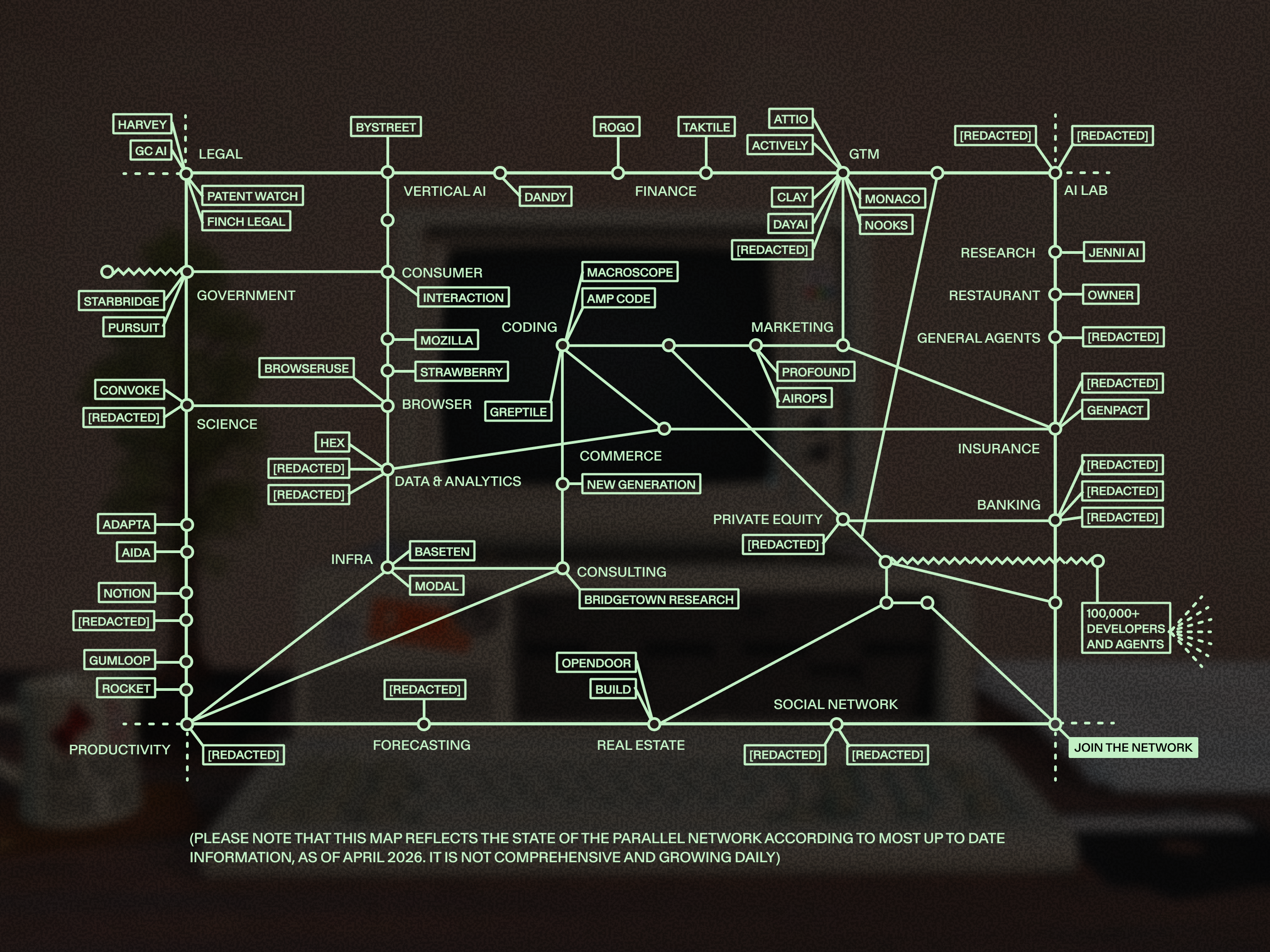
The company recognized that the modern internet was built for human eyes, not machines. When large language models attempt to "browse" the web, they are hindered by pop-ups, client-side rendering, strict paywalls, and aggressive anti-bot protections. Instead of relying on fragile web scraping, Parallel provides a suite of machine-readable web-intelligence APIs—including Search, Task, Extract, Monitor, and Chat APIs—designed explicitly for autonomous AI. Today, over 100,000 developers build on the platform. Its enterprise roster is equally formidable, boasting deep integrations with legal AI heavyweight Harvey, productivity giant Notion, proptech leader Opendoor, and several top-tier U.S. property and casualty insurers.
Funding Details: Overwhelming Insider Confidence
The $100 million Series B round was led by venture capital titan Sequoia Capital, with partner Andrew Reed taking a seat on the startup's board of directors. Perhaps the strongest signal of Parallel's momentum is the unprecedented insider confidence; every existing backer—including Kleiner Perkins, Index Ventures, Khosla Ventures, First Round Capital, Spark Capital, and Terrain Capital—aggressively participated and wrote larger checks for this round.
With a $30 million Seed, a $100 million Series A in late 2025, and now this massive Series B, Parallel Web Systems' total capital raised stands at $230 million. In a venture landscape that has grown increasingly cautious, a valuation tripling in less than half a year demonstrates an unparalleled premium placed on agent-focused infrastructure.
Market Analysis: Designing the Internet for Machines
By mid-2026, agentic AI has officially become the defining software category, capturing over 33% of global venture capital funding. However, for AI agents to transition from generating emails to executing critical business operations like financial auditing, legal discovery, or supply chain logistics, they require absolute factual accuracy and real-time data retrieval. Static LLM training data simply cannot meet these demands.
This is where Parallel Web Systems dominates a competitive landscape that includes ambitious rivals like Tavily, Exa Labs, and Diffbot. Parallel differentiates itself through the sheer size and freshness of its web index, but more importantly, through advanced provenance tracking. When an enterprise AI makes a high-stakes decision, it must cite a verifiable, auditable source. Furthermore, Parallel is pioneering a revenue-sharing model with content publishers. By compensating creators when their intellectual property is utilized by autonomous agents, the company is successfully navigating the escalating copyright tensions that plague standard LLM developers.
Strategic Implications: Accelerating Enterprise GTM
Armed with a fresh $100 million war chest, Parallel Web Systems is poised to aggressively expand its go-to-market engine. Agrawal has indicated that the new capital will heavily fund the expansion of enterprise sales and marketing teams, alongside accelerating research and development initiatives.
The startup's strategic focus is locked on heavily regulated, data-intensive verticals—such as finance, healthcare, and law—where real-time, compliant information retrieval is non-negotiable. The ROI for these sectors is already tangible; U.S. insurance clients utilizing Parallel's Task and Extract APIs have reported cutting their claims processing times in half. Moving forward, securing the lion's share of enterprise developer workflows will be essential to establish Parallel as the default web-browsing protocol for machine intelligence.
Investor Perspective: Owning the Infrastructural Moat
From an investor's standpoint, the thesis behind backing Parallel Web Systems is deeply structural. Sequoia's Andrew Reed encapsulated the core logic perfectly by noting, "One of the things that is a core shared function amongst all of these long-horizon agents is the ability to use the web".
Venture capitalists are no longer satisfied with funding the application layer; they are financing the critical "picks and shovels" that allow the emerging machine economy to function. If AI agents are projected to conduct the majority of future internet traffic, whoever owns the API layer bridging large language models with the live web stands to build a monopolistic infrastructural moat—comparable to the dominance of AWS in the early days of cloud computing.
Conclusion: The Era of the Autonomous Web
Parallel Web Systems' rapid ascent to a $2 billion valuation represents much more than a triumphant second act for Parag Agrawal post-Twitter. It serves as a definitive market signal that the era of the autonomous internet has arrived. As enterprises increasingly deploy sophisticated AI agents to execute their most complex workflows, the infrastructure that feeds those systems verifiable, structured, real-time data becomes mission-critical. Investors, founders, and tech observers must watch closely: the company that successfully redesigns the internet for machines is on track to become the most valuable foundational layer of the next decade's software ecosystem.
비트베이크에서 광고를 시작해보세요
광고 문의하기